
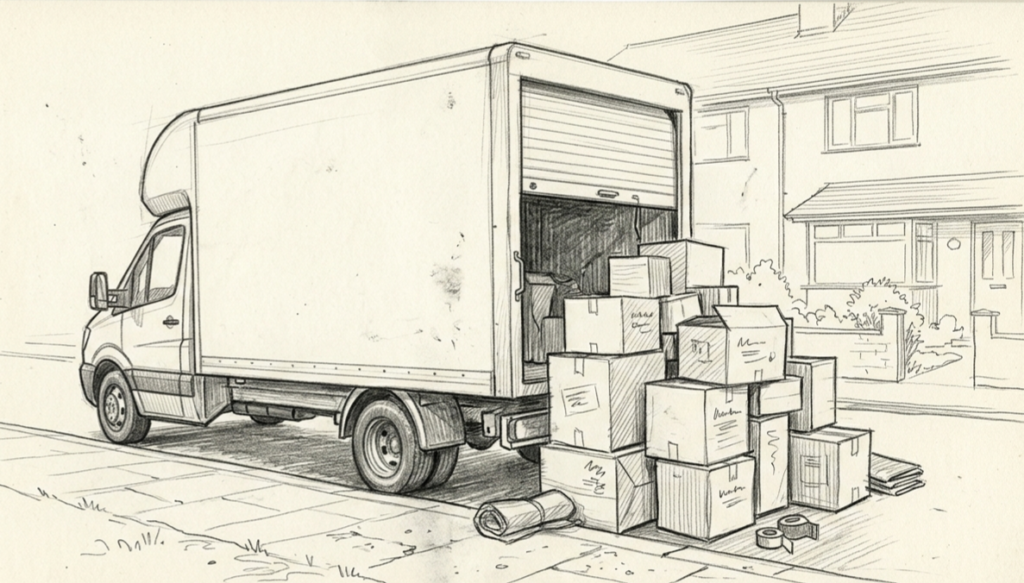
Moving House
From one of the stories in ‘Wildman’ ..That fateful Thursday, and we were coming our of the Bank. I was feeling pleased with myself, having obtained approval of one million dollars finance that will enable me to build the first car museum in town. My plans were not just accepted, but virtually seized upon and the bank wants me to commence building just as soon as I can. This was far greater response than I had anticipated. Well I know the plan of the building is way out there, and already I have seventeen cars of my own and the promise of twelve more. This is before I again go to the agents in USA and Britain to buy more cars. It is really exciting, and almost takes my mind off the predicament I am facing after witnessing the murders. To put my mind elsewhere, I go over my catalogue of personal cars that I will lend to the museum.
Pride of place is my 1903 10 Horsepower Wolseley. What a magnificent contraption it is. Every part of it hand made. In dark green with gold pin striping and luxurious leather seats it is beautiful, speaking of a time of hope, of better things and better times to come. This magnificent creation was originally the property of Lord Henry Royce. It was in his family for a long time, passing on to other owners during the great depression.
Creating Fictional Worlds

Creating fictional worlds is one of Richard’s favourite parts of writing. Whether he is imagining life in the dusty streets of first‑century Jerusalem or deep underground in the hidden caverns of Under Arnhem, every world begins with a simple “what if?”. What if you grew up in a place where no one had seen the sky for generations? What if you were a market‑stall worker who happened to be there the day a miracle took place? From that starting point he begins sketching maps, listing everyday details (food, work, families, slang), and asking how faith, fear and hope would look in that setting. For Richard, a believable world is built from small, concrete details rather than long explanations. He thinks about noises, smells and textures first—the scrape of sandals on stone, the echo of water in a tunnel, the way lamplight falls on a crowded room—and lets these details hint at the bigger structures of society, technology and belief. He also pays attention to limits: what his characters can’t do or don’t know shapes the story as much as what they can. Above all, every world he creates has to leave space for encounter with God, whether openly named or quietly implied. In that way, his fictional settings become mirrors, helping readers see their own world, and their own walk of faith, from a fresh angle.
The Writing Process

Richard’s stories begin long before he sits at the keyboard. Often they start with a single question—“What did the man on the mat think when the roof opened?” or “What happened to the boy with the loaves and fishes when he went home?”—and a half‑remembered creek from his childhood in South Australia or suburban Melbourne. From there he reads and re‑reads the relevant Bible passage, paying close attention to tiny details: a place name, a throw‑away line, a look in the crowd. He then imagines an ordinary person on the edge of that scene and asks what they might have feared, hoped or misunderstood in that moment. Drafts are written by hand or in a simple document, usually in first person, as if the character is talking directly to the reader. Richard lets the voice ramble at first, collecting sensory details—the grit of dust, the crush of the crowd, the smell of fish or incense—before trimming the piece back so that every sentence serves the heart of the story. After that, the draft is checked carefully against Scripture to be sure that, while the internal thoughts are imagined, the events themselves remain faithful to the biblical text. Only then does he polish the language, looking for places where a fresh image or a quiet pause can help readers step into the scene and feel, for a moment, as if they too were there.
Biblical Themes
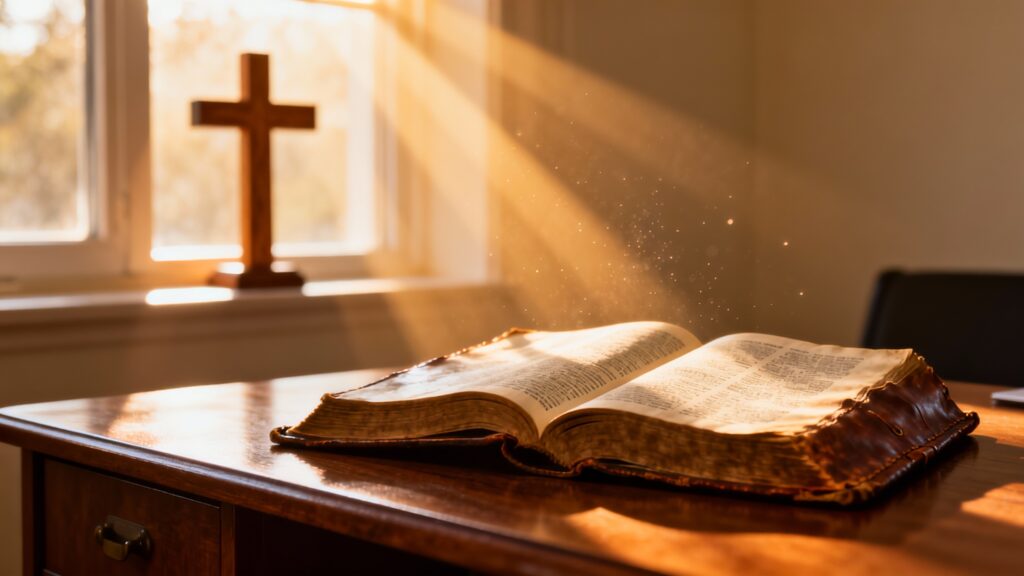
Richard’s stories grow out of a deep love for the Bible and a desire to help readers “stand inside” familiar passages rather than skim past them. Again and again he returns to themes of encounter—ordinary people unexpectedly meeting God in the middle of daily life. Whether it is a servant caught up in a miracle, a fisherman watching the storm fall silent, or someone in the crowd wrestling with doubt, his characters are shaped by the same questions many readers carry: Who is Jesus, really? What does forgiveness look like? Can broken people be restored? Grace and second chances thread through his work, alongside themes of fear, courage and the cost of following. Richard is particularly drawn to the way Jesus notices those on the margins—women, outsiders, the sick and the overlooked—and he often chooses such voices as his narrators. He also weaves in the tension between faith and uncertainty; his characters do not always understand what they are seeing, but they are changed by it. By exploring these biblical themes through first‑person storytelling, Richard hopes to nudge readers back to Scripture with fresh eyes and a renewed sense that the God of those ancient stories is still at work today.